
Original Article
Eduweb, 2026, abril-junio, v.20, n.2. ISSN: 1856-7576
Doi: https://doi.org/10.46502/issn.1856-7576/2026.20.02.13
Digital technology-enhanced innovative approaches in future foreign language teacher education
Oleksandra Shynkaruk
Сandidate of Legal Sciences, Associate Professor, Associate Professor of the Department of Philosophy and International Communication, National University of Life and Environmental Sciences of Ukraine, Ukraine. aleksandra.shyn5@gmail.com
Yuliia Liakhovska
Doctor of Philosophy, Military Institute, Taras Shevchenko National University of Kyiv, Ukraine. lyrebird26@ukr.net
Victoria Kylyvnyk
Candidate of Pedagogical Science, Teacher of English, Communal Higher Education Institution «Vinnytsia Humanities Pedagogical College», Ukraine. vicakilivnik1982@gmail.com
Ivanna Zaremska
Candidate of Philological Sciences, Senior Lecturer at the Department of Foreign Languages and Teaching Methods, Oleksandr Dovzhenko Hlukhiv National Pedagogical University, Ukraine. zaremska@gnpu.edu.ua
Oksana Doichyk
PhD in Philology, Associate Professor, Associate Professor at the Department of English Philology, Vasyl Stefanyk Carpathian National University, Ukraine. oksana.doichyk@cnu.edu.ua
Cómo citar:
Shynkaruk, O., Liakhovska, Y., Kylyvnyk, V., Zaremska, I., & Doichyk, O. (2026). Digital technology-enhanced innovative approaches in future foreign language teacher education. Revista Eduweb, 20(2), 208-228. https://doi.org/10.46502/issn.1856-7576/2026.20.02.13
Recibido: 13/02/26 Aceptado: 16/05/26
Resumen
El artículo examina la importancia y las características clave de las tecnologías digitales y los enfoques innovadores en la formación de futuros profesores de lenguas extranjeras. Aunque las tecnologías digitales son ampliamente utilizadas en la enseñanza de idiomas, los estudios existentes se centran principalmente en herramientas individuales y plataformas en línea, en lugar de sistemas pedagógicos integrados que fomenten de manera sistemática la competencia digital en los programas de formación docente. El objetivo de este estudio fue investigar la eficacia de un sistema innovador de formación apoyado en tecnologías digitales e identificar las condiciones pedagógicas que contribuyen al desarrollo de la competencia digital en futuros profesores de lenguas extranjeras. El estudio empleó un diseño cuantitativo cuasi experimental con grupo control y grupo experimental. El análisis estadístico se realizó mediante la prueba de chi-cuadrado de Pearson. Los participantes fueron estudiantes de maestría matriculados en programas de formación de profesores de lenguas extranjeras. Los resultados demostraron mejoras estadísticamente significativas en los componentes motivacional, cognitivo, de actividad y comunicativo de la competencia digital entre los estudiantes del grupo experimental. Los hallazgos confirman la eficacia del sistema innovador propuesto, que integra plataformas digitales, gamificación, aprendizaje móvil y herramientas colaborativas en línea para fortalecer la competencia digital en la formación docente.
Palabras clave: tecnologías digitales, futuros profesores de lenguas extranjeras, enfoques innovadores, competencia digital, formación docente.
Abstract
The article examines the importance and key characteristics of digital technologies and innovative approaches in the training of future foreign language teachers. Although digital technologies are widely used in language education, existing studies mainly focus on individual tools and online platforms rather than on integrated pedagogical systems that systematically foster digital competence in teacher education programs. The purpose of this study was to investigate the effectiveness of an innovative training system supported by digital technologies and to identify the pedagogical conditions that contribute to the development of digital competence among future foreign language teachers. The study employed a quantitative quasi-experimental design with a control group and an experimental group. Statistical analysis was conducted using Pearson’s chi-square test. The participants were master’s students enrolled in foreign language teacher education programs. The results demonstrated statistically significant improvements in the motivational, cognitive, activity, and communicative components of digital competence among students in the experimental group. The findings confirm the effectiveness of the proposed innovative system integrating digital platforms, gamification, mobile learning, and collaborative online tools for strengthening digital competence in teacher education.
Keywords: digital technologies, future foreign language teachers, innovative approaches, digital competence, teacher education.
Introduction
Despite the increasing attention devoted to the integration of digital technologies into foreign language education, the existing body of research mainly focuses on the application of individual digital tools, platforms, or isolated teaching techniques. Many studies analyze the motivational potential of gamification, the role of artificial intelligence in language learning, or the advantages of online learning environments (Wozniak et al., 2018). However, these studies rarely address the systemic integration of digital technologies into the professional training of future foreign language teachers within higher education programs (Tai et al., 2022).
Furthermore, previous research often emphasizes technological innovation itself rather than examining the pedagogical conditions and structured educational models that ensure the effective development of digital competence among future teachers (Markauskaite et al., 2023). As a result, the issue of designing and empirically validating a comprehensive innovative system that combines digital technologies with pedagogically grounded training approaches remains insufficiently explored in contemporary educational research (Videnovik et al., 2023).
Therefore, the research gap lies in the lack of empirically tested models that integrate digital technologies, innovative pedagogical approaches, and specific pedagogical conditions aimed at the systematic development of digital competence among future foreign language teachers.
In this context, the research problem of the present study is to determine how the implementation of an integrated innovative system and pedagogical conditions supported by digital technologies influences the development of digital competence in future foreign language teachers in higher education institutions (Zhang & Zou, 2020).
Literature Review
Researchers increasingly emphasize the importance of integrating digital technologies into foreign language education and teacher training. According to Galante et al. (2023), digital plurilingual pedagogies create favorable conditions for improving oral communication in foreign language classes and encourage students to actively use the target language. The authors argue that such approaches mobilize learners’ entire linguistic repertoire through cross-linguistic comparisons, translanguaging, and multimodal interaction in digital environments. Their study also demonstrated that synchronous digital platforms contribute to the development of plurilingual and pluricultural awareness among students.
Schaefer et al. (2019) consider digital technologies an essential component of modern foreign language learning. The researchers state that tools such as web conferencing, digital games, digital storytelling, and telecollaboration expand opportunities for language acquisition and allow students to experience more flexible and interactive forms of learning. In their opinion, digital resources contribute to the development of learners’ autonomy, communication skills, and engagement in the educational process.
Harvey Arce & Cuadros Valdivia (2020) focus on the motivational potential of gamification in foreign language learning. The authors developed a digital platform based on competitiveness and gamified activities and concluded that gamification elements, including rankings, medals, and progress indicators, significantly increase students’ motivation to learn foreign languages. According to their findings, most participants preferred gamified digital tools and demonstrated greater interest in language learning through interactive educational environments.
Jacome Paredes et al. (2025) investigate the role of artificial intelligence in vocabulary retention among foreign language students. The researchers argue that AI-powered tools, including intelligent tutoring systems and augmented reality applications, improve long-term vocabulary retention, writing accuracy, and learner motivation. At the same time, the authors point out certain limitations of AI technologies, such as occasional inaccuracies and insufficient opportunities for authentic conversational practice, emphasizing the necessity of further improvement of adaptive digital learning environments.
Finocchiaro & Leto (2018) underline the importance of combining digital learning with foreign language education in innovative laboratory settings. According to the authors, the use of multimedia tools, virtual platforms, and flipped classroom approaches promotes students’ autonomy, teamwork, and creativity. They emphasize that digital technologies allow students not only to learn a foreign language but also to use it practically while creating their own educational products and participating in collaborative activities.
Moisés & Borges (2021) analyze the process of technological appropriation by teachers of Portuguese as a foreign language during the COVID-19 pandemic. The researchers stress that the rapid transition to online education revealed the crucial role of teachers’ digital competence and professional training. In their view, effective integration of digital technologies depends on teachers’ ability to adapt pedagogical practices to new digital environments and to apply innovative teaching approaches in everyday educational activities.
Thus, the analyzed studies demonstrate that digital technologies significantly influence the development of foreign language education and teacher preparation. Researchers highlight the positive effects of digital platforms, gamification, artificial intelligence, telecollaboration, and multimedia environments on students’ motivation, communication, autonomy, and digital competence. However, despite the considerable attention devoted to digital technologies in language education, the issue of developing a comprehensive innovative system and pedagogical conditions for training future foreign language teachers using digital technologies remains insufficiently researched. Therefore, further studies are needed to investigate the integrated formation of digital competence among future foreign language teachers in higher education institutions.
Research purpose: to analyze the effect of implementing pedagogical strategies supported by digital technologies on the development of digital competence in future foreign language teachers.
Methodology
This study employed a quantitative quasi-experimental research design to evaluate the effectiveness of an innovative system supported by digital technologies in the development of digital competence among future foreign language teachers. The methodological framework was based on the comparison of a control group and an experimental group before and after the implementation of the pedagogical intervention.
Research Design
The study was conducted during 2023–2025 and included two main stages: an ascertaining stage and a formative stage. During the ascertaining stage, the initial level of digital competence among participants was identified in order to determine the homogeneity of the control and experimental groups. During the formative stage, the innovative system and the pedagogical conditions supported by digital technologies were implemented with the experimental group, while the control group continued its training through traditional instructional approaches.
The research followed a pre-test and post-test logic. The initial diagnosis allowed the researchers to establish the baseline levels of digital competence, while the final diagnosis made it possible to compare the changes achieved after the intervention.
Participants
The study involved 122 master’s students enrolled in foreign language teacher education programs. The participants were divided into two independent groups: 60 students in the control group and 62 students in the experimental group. At the beginning of the experiment, both groups demonstrated approximately equivalent levels of digital competence, which allowed the researchers to compare the effects of the intervention.
Pedagogical Intervention
The experimental group participated in an innovative training system focused on the pedagogical use of digital technologies in foreign language teacher education. This system included the use of digital educational platforms, cloud technologies, multimedia resources, gamification strategies, mobile applications, virtual learning environments, collaborative online tools, and digital content creation activities.
Students in the experimental group worked with resources such as Google Classroom, Moodle, Zoom, YouTube, blogs, social networks, and Wiki technologies. They also participated in project-based activities, online collaboration, interactive tasks, and the creation of digital educational products.
A special course entitled “Foreign Language Teacher in the Conditions of Digital Transformation of Education” was implemented as part of the intervention. This course included the use of AR/VR applications, Google Workspace for Education, gamification platforms, and the development of educational products such as chatbots, interactive quests, and mobile applications.
The pedagogical conditions implemented during the intervention were:
Criteria and Indicators
The development of digital competence was assessed through four components:
For each component, three levels of development were established: low, average, and high.
Data Collection
Data were collected through diagnostic assessments applied at the beginning and at the end of the pedagogical experiment. These assessments made it possible to identify the distribution of students across the low, average, and high levels of digital competence in both the control and experimental groups.
The comparison between the initial and final results allowed the researchers to determine the degree of progress achieved by each group and to evaluate the effectiveness of the innovative system implemented in the experimental group.
Data Analysis
The quantitative data were analyzed using Pearson’s chi-square test. This statistical test was applied to compare the distribution of students across the three levels of digital competence in the control and experimental groups.
The null hypothesis stated that there were no statistically significant differences between the control and experimental groups. The alternative hypothesis stated that there were statistically significant differences between both groups after the implementation of the innovative system.
The level of statistical significance was set at α = 0.05. When the empirical chi-square value exceeded the critical value, the null hypothesis was rejected and the alternative hypothesis was accepted.
Ethical Considerations
The study was conducted with respect for the principles of voluntary participation, confidentiality, and responsible use of the information collected. The data were analyzed in aggregate form, without identifying individual participants.
Results and Discussion
The importance and key features of digital technologies and innovative approaches in training future foreign language teachers. The content of the main concepts of the study. Modern platforms for innovative teacher training.
In the educational process of higher education, digitalization, which directly depends on the level of each student's mastery of digital technologies, is aimed at lifelong learning, i.e., lifelong learning – a continuous learning process. In the conditions of digitalization, the priority tasks of the development of higher education should include the training of future foreign language teachers using digital technologies, using innovative approaches to their training, resource filling of the educational environment with modern digital learning tools, and ways of effective use of digital technologies by teachers and higher education students (Lisborg et al., 2021).
Particularly high demands are placed on innovative changes in education regarding the level of practical training and theoretical knowledge of future foreign language teachers. The readiness of future foreign language teachers to use digital technologies in their professional activities ensures the ability to use digital technologies, which creates the basis for the formation of competence and digital literacy in them, which the EU recognizes as one of the key competencies of a person for a full life and activity (Seiler et al., 2017).
Future foreign language teachers must be able to tailor the educational process to each student's personality and enhance their professional practice, guiding each student toward a multitude of opportunities for highly effective, independent development. This is in a fundamentally new context, focusing on the need to create modern pedagogical systems aimed at innovative activity, to determine the content and issues of personal and professional training for teachers, and to ensure the search for future specialists using new approaches to learning.
The possibilities of working with information have changed the intensive development of digital technologies. A characteristic feature of digital technologies is their ability to provide unlimited opportunities for creative joint and independent activity of students and teachers. The introduction of digital technologies into the educational process provides new opportunities for students' development, facilitates the acquisition of skills, increases interest in professional activity, and contributes to better assimilation of the material, making students' lives less stressful and more interesting (Alvarez-Flores, 2021).
Continuous improvement of pedagogical activity determines the dynamism of the introduction of innovative technologies into all spheres of life. In pedagogy, the terms "innovative" and "innovation" refer to innovations that concern the modern aspects of the higher education process. In innovative technologies, non-standard approaches are used to organize students' educational activities, thereby developing original educational goals, methods, and forms of learning.
The communicative space of innovative learning offers modern platforms for future teachers to learn: Google Meet, Google Classroom, Moodle, Microsoft Teams, Zoom, Kahoot, Google Hangouts, Cisco Webex, etc. The future teacher can use any resource (YouTube, podcasts, blogs, Twitter, educational websites, mobile applications, bookmarks, etc.) that is at the same time a means of development and a means of learning to contribute to students' motivation. During the training, students present the studied material as a "mind map", a scribe presentation, a PowerPoint presentation, a "brainstorming", a role-playing game, a "case method", an "open microphone", a competition with practical tasks with subsequent discussion, etc. (Petri & Gresse von Wangenheim, 2017).
In the context of information abundance, digital competence acquires special significance; it is currently defined as an educational key competence and provides students with the skills to act in relation to information across educational areas, subjects, and the world around them. In modern universities, students use various forms of working with information, but this is often perceived by students as part of subject information and occurs spontaneously. The availability of information and its significant amount create the illusion for students that it is easy to obtain knowledge about anything. Therefore, the teacher must actively involve students in the educational process and create a relaxed learning atmosphere in the lesson. Modern students are a generation of the digital age. Therefore, they confidently use smartphones, computers, and the Internet, tablets, and other mobile devices in everyday life (Guerrero-Quiñonez et al., 2023).
Main approaches to groups of innovative technologies in the context of professional foreign language training of future foreign language teachers.
In the context of professional foreign language training of future foreign language teachers, several main approaches to groups of innovative technologies can be conditionally distinguished:
Moreover, the combination of such approaches in the context of professional foreign language training for future foreign language teachers ensures the integrity of the training, contributes to the formation of the future teacher's general professional readiness to work in an innovative educational environment, and to the formation of professional foreign language competence.
Experimental verification of the effectiveness of the innovative system and pedagogical conditions for training future foreign language teachers using digital technologies.
During 2023-2025, an experimental study was conducted to evaluate the effectiveness of the developed innovative system and the pedagogical conditions for training future foreign language teachers to develop their digital competence using digital technologies.
Students of the second (master's) level were involved in the experimental study. The purpose of the research and experimental work was to verify the effectiveness of the developed innovative system and the pedagogical conditions for training future foreign language teachers to develop their digital competence using digital technologies.
At the study's ascertaining stage, the initial level of digital competence formation among future foreign language teachers was established. To determine whether statistically significant differences exist between the experimental and control groups, the data obtained were analyzed using statistical methods.
At the formative stage, the developed innovative system and pedagogical conditions for training future foreign language teachers to develop their digital competence were implemented in the experimental group. CG students studied according to the usual methodology.
The educational web resources developed for the EG were used and placed in the system's web space for training future foreign language teachers using digital technologies of the global or local network in various formats (audio and video, graphics, text, archive formats). Wiki sites formed a special category. Their use in the educational activities of EG students opened up wide opportunities for organizing research, implementing freedom in learning, and for the independent accumulation and assimilation of knowledge. Using wiki technology, EG students had the opportunity to exchange ideas, quickly and effortlessly place various educational web resources, create a powerful source of educational web resources, and reuse posted web resources. EG students worked with the WikiWiki service, a convenient platform for organizing educational projects and presenting creative developments jointly.
To prepare future foreign language teachers using digital technologies, various services played an important role in EG: YouTube, virtual sites, blogs, webcasts, social networks, and special bookmarks. Let us note the most effective tools and innovative approaches for the development of the digital environment of education in higher education that were proposed for EG students: mobile devices, mobile web applications for any devices and platforms, a collection of mobile, universal HTML5 applications for website development, "cloud" applications, Personal Cloud (provides access to data and applications), "Internet of Things", Strategic Big Data – processing of large data sets, Hybrid IT & Cloud Computing – cloud" calculations.
The use of the Smart Board has fundamentally changed the teaching methodology for EG students and helped the teacher ensure each student's active participation in the lesson. Thanks to the Smart Board – an interactive board, students began to understand complex ideas as a result of an effective, clear, and dynamic presentation of professional material. This allowed teachers, turning to innovative modern resources, to adapt to specific needs and use different learning styles, because the Smart Board gallery contains a variety of tools and interactive tools for students to work on mastering meta-subject methods of activity.
Among the interesting innovative approaches using digital technologies to train future foreign language teachers in EG was the rapid adaptation of online learning, which manifested itself in the active use of online courses, for example, open international online courses on the Coursera platform or others, and in the development of blended learning.
Digital libraries at higher education institutions provided significant support for the application of digital technologies in education in EG. Thanks to digitalization, each student of higher education gains access to information that was previously available only to experts and scientists.
The implementation of the stage of training future foreign language teachers using digital technologies in the EG took place through specially organized pedagogical conditions, digital tools, and interactive approaches that contribute to increasing professional interest and awareness of the significance of innovations.
A special course was developed and implemented in the EG: “Foreign language teacher in the conditions of digital transformation of education”. Future foreign language teachers were involved in testing lesson fragments and designing using modern digital tools (AR/VR applications, Google Workspace for Education, gamification platforms), and in creating educational products – interactive quests, mobile applications, chatbots.
The system-forming factor was the pedagogical conditions:
Providing separate conditions for training future foreign language teachers using digital technologies in higher education contributes to improving and raising the awareness of future specialists of their own communicative strategies through self-assessment of speech activity, analysis of pedagogical interaction, and correction of professional communication.
In the control and experimental groups, a systematic summary and current diagnosis and assessment of the development of digital competence were conducted. At the end of the formative stage, the results obtained were summarized, the data were processed using statistical methods, and statistical conclusions were formulated.
To diagnose the development of digital competence in future foreign language teachers, components, indicators, and levels were outlined in a pedagogical experiment.
Motivational component.
Indicators of the effectiveness of the implementation of the developed innovative system and pedagogical conditions for training future foreign language teachers using digital technologies to form digital competence in them:
Cognitive component.
Indicators of the effectiveness of the implementation of the developed innovative system and pedagogical conditions for training future foreign language teachers using digital technologies to form their digital competence:
Activity component
Indicators of the effectiveness of the implementation of the developed innovative system and pedagogical conditions for training future foreign language teachers using digital technologies to form their digital competence:
Communicative component.
Indicators of the effectiveness of the implementation of the developed innovative system and pedagogical conditions for training future foreign language teachers using digital technologies to form their digital competence:
To assess the formation of the components of the phenomenon’s effectiveness, an ordinal scale of levels was chosen: low, average, and high.
Methods of statistical processing of empirical data. To select methods for formulating substantiated conclusions and obtaining reliable results in the experiment, an analysis of literary sources on the practice and theory of research, as well as of statistical data processing, was conducted.
The study's general population comprises future foreign language teachers. We will use open data sources to determine its volume, in particular, the Unified Electronic Database on Education.
To participate in the experimental study, the required number of respondents was calculated using the formula:
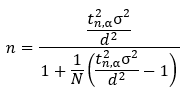

Therefore, to ensure reliability in the control and experimental groups, the number of respondents should be at least 69. As follows from the formula, the representativeness of a sample from a smaller general population can be ensured by a smaller number of people, and the larger its volume relative to the general population of respondents, the more representative the sample will be.
Within the sample population – 122 respondents who participated in the experiment – control (60 respondents) and experimental (62 respondents) groups of future foreign language teachers were selected, independent of each other.
According to the results of the survey of the sample population, we needed to compare the formation of digital competence of respondents through the effectiveness of the implementation of the developed innovative system and pedagogical conditions, among the participants of the pedagogical experiment, and formulate conclusions about their probability and existing differences, and the possibility of extending the obtained effect to the general population of respondents. For this purpose, the method of testing statistical hypotheses (null hypothesis H0 and alternative hypothesis H1) was applied.
In our study, a hypothesis was formulated: the implementation of the developed innovative system and the pedagogical conditions for training future foreign language teachers using digital technologies contribute to increasing the effectiveness of the formation of their digital competence.
To analyze (coincidences or differences in the characteristics of the control group and the experimental group), the data obtained in the empirical study, two statistical hypotheses were formulated:
The methodology for testing hypotheses was as follows:

A 5% possibility of error is allowed; that is, in the study, we have chosen a probability level of error of 0.05, with a reliability of 95%.


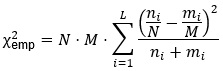



Results of the ascertaining stage of the pedagogical experiment.
At the ascertaining stage of the experiment, we obtained data that provided grounds for concluding about the preliminary assumptions regarding the formation of the outlined competence of future foreign language teachers through the implementation of the developed innovative system and pedagogical conditions.
Let us show this in tabular form.
Table 1.
Formation of the motivational component (ascertaining stage)

Diagnosis of the formation of the motivational component of future foreign language teachers revealed: 49.5% of higher education applicants CG and 48.6% EG had a low level; 41.3% CG and 48.6% EG had an average level, 9.2% of higher education applicants CG and 9.1% EG had a high level (Table 1). Thus, at the beginning of the experiment, the overwhelming majority of respondents had poorly formed motivational attitudes towards developing the outlined competence of future foreign language teachers.
Let us compare the experimental and control groups in terms of the level of formation of the motivational component and assess the reliability of the data obtained. To do this, we formulate two hypotheses.
Hypothesis H0: the control and experimental groups of respondents do not differ significantly in the level of formation of the motivational component.
Hypothesis H1: The control and experimental groups of respondents differ significantly in the level of formation of the motivational component.
Let us calculate the Pearson criterion.

Table 2.
Formation of the cognitive component (ascertaining stage)

Diagnosis of the formation of the cognitive component among future foreign language teachers revealed that 50.6% of higher education applicants in the control group (CG) and 50.8% in the experimental group (EG) demonstrated a low level; 37.8% in the CG and 38.1% in the EG showed an average level, while 11.8% in the CG and 11.1% in the EG demonstrated a high level (Table 2). Thus, at the beginning of the experiment, the vast majority of respondents lacked sufficient knowledge regarding the outlined problem and demonstrated an insufficient level of foreign-language vocabulary related to digital technologies. Let us compare the experimental and control groups in terms of the level of formation of the cognitive component and assess the reliability of the data obtained. To do this, we formulate two hypotheses.
Hypothesis H0: the control and experimental groups of respondents do not differ significantly in the level of formation of the cognitive component.
Hypothesis H1: The control and experimental groups of respondents differ significantly in the level of development of the cognitive component.
Let us calculate the Pearson criterion.

Table 3.
Formation of the activity component (ascertaining stage)

Diagnosis of the formation of the activity component of future foreign language teachers revealed: 52.2% of higher education applicants CG and 53.7% of EG had a low level; 37.9% of CG and 39.2% of EG had an average level, 9.9% of higher education applicants CG and 9.1% of EG had a high level (Table 3). Thus, at the beginning of the experiment, the vast majority of respondents had insufficiently developed abilities to use digital technologies to learn a foreign language and had not yet developed the ability to use the content and methods of foreign-language teaching.
Let us compare the experimental and control groups in terms of the level of formation of the activity component and check the reliability of the data obtained. To do this, we formulate two hypotheses.
Hypothesis H0: the control and experimental groups of respondents do not differ significantly in terms of the level of formation of the activity component.
Hypothesis H1: The control and experimental groups of respondents differ significantly in the level of development of the activity component.
Let us calculate the Pearson criterion.

Table 4.
Development of the communicative component (ascertaining stage)

Diagnosis of the formation of the communicative component of future foreign language teachers revealed: 51.9% of higher education applicants CG and 51.9 EG had a low level; 29.3% CG and 29.2% EG had an average level, 18.8% of higher education applicants CG and 18.9% EG had a high level (Table 4). Thus, at the beginning of the experiment, the vast majority of respondents had not sufficiently developed the ability to organize and communicate in a foreign language using digital technologies.
Let us compare the experimental and control groups in terms of the level of formation of the communicative component and check the reliability of the data obtained. To do this, we formulate two hypotheses.
Hypothesis H0: the control and experimental groups of respondents do not differ significantly in terms of the level of formation of the communicative component.
Hypothesis H1: The control and experimental groups of respondents differ significantly in the level of development of the communicative component.
Let us calculate the Pearson criterion.

Therefore, it can be concluded that, according to the results of the ascertaining stage of the experiment:
Results of the formative stage of the pedagogical experiment. Empirical data were obtained at the end of the formative stage of the study, which gave grounds to confirm the assumptions regarding the formation of digital competence among higher education students of the experimental group by implementing the developed innovative system and pedagogical conditions for training future foreign language teachers using digital technologies:
Let us show this in tabular form.
Table 5.
Formation of the motivational component (formative stage)

Diagnosis of the formation of the motivational component of future foreign language teachers at the formative stage of the experiment revealed: 47.7% of higher education applicants CG and 8.4% EG had a low level; 41.5% CG and 40.7% EG had an average level, 10.8% of higher education applicants CG and 50.9% EG had a high level (Table 5). Thus, at the end of the experiment, the vast majority of EG respondents clearly formed motivational attitudes towards developing the outlined competence of future foreign language teachers. In contrast, CG respondents did not show significant positive changes.
Let us compare the experimental and control groups in terms of the level of motivational component formation and assess the reliability of the data obtained. To do this, we formulate two hypotheses.
Hypothesis H0: the control and experimental groups of respondents do not differ significantly in terms of the level of formation of the motivational component.
Hypothesis H1: The control and experimental groups of respondents differ significantly in the level of formation of the motivational component.
Let us calculate the Pearson criterion.

Table 6.
Formation of the cognitive component (formative stage)

Diagnosis of the formation of the cognitive component of future foreign language teachers at the formative stage of the study revealed: 47.8% of higher education applicants in the CG and 5.7% in the EG had a low level; 38.9% in the CG and 36.3% in the EG had an average level, 13.3% of higher education applicants in the CG and 57.8% in the EG had a high level (Table 6). Thus, at the end of the experiment, the vast majority of EG respondents demonstrated deep knowledge of the outlined problem and a predominantly high level of foreign-language vocabulary. The results in the CG remained practically at the ascertaining level.
Let us compare the experimental and control groups in terms of the level of formation of the cognitive component and assess the reliability of the data obtained. To do this, we formulate two hypotheses.
Hypothesis H0: The control and experimental groups of respondents do not differ significantly in the level of development of the cognitive component.
Hypothesis H1: The control and experimental groups of respondents differ significantly in the level of development of the cognitive component.
Let us calculate the Pearson criterion.

Table 7.
Formation of the activity component (formative stage)

Diagnosis of the formation of the activity component of future foreign language teachers at the formative stage of the study revealed: 43.33% of higher education applicants CG and 11.1 EG had a low level; 41.9% CG and 37.2% EG had an average level, 14.8% of higher education applicants CG and 39.1% EG had a high level (Table 7). Thus, by the end of the experiment, the vast majority of EG respondents had significantly developed their ability to use digital technologies for learning a foreign language and to apply the content and methods of foreign-language teaching. The results of the control group respondents did not differ significantly from those of the ascertaining section.
Let us compare the experimental and control groups by the level of formation of the activity component and check the reliability of the data obtained. To do this, we formulate two hypotheses.
Hypothesis H0: The control and experimental groups of respondents do not differ significantly in the level of development of the activity component.
Hypothesis H1: The control and experimental groups of respondents differ significantly in the level of development of the activity component.
Let us calculate the Pearson criterion.

Table 8.
Development of the communicative component (formative stage)

Diagnosis of the development of the communicative component of future foreign language teachers at the formative stage of the experiment revealed: 42.0% of higher education applicants CG and 5.8 EG had a low level; 36.9% CG and 33.1% EG had an average level, 21.1% of higher education applicants CG and 61.1% EG had a high level (Table 8). Thus, at the end of the experiment, the vast majority of EG respondents clearly developed the ability to organize and communicate in a foreign language using digital technologies. The results of the control group respondents did not differ significantly from those of the ascertaining section.
Let us compare the experimental and control groups in terms of the level of development of the communicative component and check the reliability of the data obtained. To do this, we formulate two hypotheses.
Hypothesis H0: The control and experimental groups of respondents do not differ significantly in terms of the level of development of the communicative component.
Hypothesis H1: The control and experimental groups of respondents differ significantly in the level of development of the communicative component.
Let us calculate the Pearson criterion.

Therefore, it can be concluded that according to the results of the formative stage of the experiment, the experimental group, in which the developed innovative system and pedagogical conditions for training future foreign language teachers using digital technologies were implemented, which contribute to increasing the effectiveness of the formation of digital competence in them, exceeds the control group in terms of the level of development of all the identified components in higher education applicants.
Analysis of the development dynamics for the outlined components indicates that, in the experimental group, positive changes were more pronounced than in the control group.
Therefore, based on the results of the formative stage of the experiment, it can be concluded that, among higher education applicants, there are statistically significant differences between the control and experimental groups in the level of development of both individual components and the overall. More significant positive changes were recorded in the experimental group than in the control group. The above is a strong basis for asserting the effectiveness of the developed innovative system and pedagogical conditions.
Conclusions
The study confirmed that the integration of pedagogical strategies supported by digital technologies positively influences the development of digital competence among future foreign language teachers. The implementation of the innovative educational system in the experimental group generated statistically significant improvements in the motivational, cognitive, activity, and communicative components when compared with the control group, demonstrating the pedagogical value of structured digital interventions in teacher education.
The findings indicate that the use of digital educational platforms, collaborative online tools, gamification strategies, mobile learning resources, and practice-oriented activities can strengthen not only technological skills but also professional readiness for teaching in digitally mediated educational environments. These results reinforce the importance of moving beyond the isolated use of digital tools toward integrated pedagogical models that systematically foster digital competence development in teacher education.
From an educational perspective, the study highlights the relevance of designing innovative teacher training programs that combine technological resources with active, communicative, and practice-oriented pedagogical approaches. Preparing future foreign language teachers for digital transformation requires not only access to technology, but also intentional pedagogical planning that promotes interaction, learner autonomy, critical use of digital resources, and professional application in authentic teaching contexts.
This study has some limitations. The research was conducted with a specific sample of master’s students enrolled in foreign language teacher education programs, which may limit the generalizability of the findings to other educational contexts or academic disciplines. In addition, the quasi-experimental design focused primarily on short-term changes in digital competence development; therefore, the long-term sustainability of the observed effects remains uncertain.
Future research should explore the long-term development of digital competence, compare the effectiveness of specific digital pedagogical interventions, and examine how similar innovative training models can be adapted to other teacher education programs and educational levels.
Bibliographic references
Alvarez-Flores, E. P. (2021). Uso crítico y seguro de tecnologías digitales de profesores universitarios. Formación Universitaria, 14(1), 33–44. https://doi.org/10.4067/S0718-50062021000100033
Elshiekh, R., & Butgerit, L. (2017). Using Gamification to Teach Students Programming Concepts. Open Access Library Journal, 4, 1-7. https://doi.org/10.4236/oalib.1103803
Finocchiaro, G., & Leto, E. (2018). Digital foreign language learning in the “Intercultura” lab. In Proceedings of the 11th Innovation in Language Learning International Conference (pp. 99–102). Pixel. https://conference.pixel-online.net/ICT4LL/files/ict4ll/ed0011/FP/1834-ICL3446-FP-ICT4LL11.pdf
Galante, A., Zeaiter, L. F., de la Cruz, J. W. N., Massoud, N., Lee, L., Aronson, J., de Oliveira, D. S. A., & Teodoro-Torres, J. A. (2023). Digital plurilingual pedagogies in foreign language classes: Empowering language learners to speak in the target language. The Language Learning Journal, 51(4), 523–543. https://doi.org/10.1080/09571736.2023.2179654
Guerrero-Quiñonez, A. J., Bedoya-Flores, M. C., Mosquera-Quiñonez, E. F., Mesías-Simisterra, Á. E., & Bautista-Sánchez, J. V. (2023). Educational platforms: Digital tools for the teaching-learning process in education. Ibero-American Journal of Education & Society Research, 3(1), 259–263. https://doi.org/10.56183/iberoeds.v3i1.626
Harvey Arce, N. P., & Cuadros Valdivia, A. M. (2020). Adapting competitiveness and gamification to a digital platform for foreign language learning. International Journal of Emerging Technologies in Learning (iJET), 15(20), 194–209. https://doi.org/10.3991/ijet.v15i20.16135
Jacome Paredes, V., Espinoza Romero, S. M., & Andraus Quintero, C. E. (2025). Herramientas digitales impulsadas por inteligencia artificial para la retención de vocabulario en estudiantes de lenguas extranjeras: Un estudio basado en percepciones. Revista San Gregorio, 1(62), 79-84. https://doi.org/10.36097/rsan.v1i62.3579
Lisborg, S., Handel, W., Schroeder, V., & Rehder, M. (2021). Digital competences in Nordic teacher education: An expanding agenda. Nordic Journal of Comparative and International Education, 5(4), 53–69. https://doi.org/10.7577/njcie.4295
Markauskaite, L., Carvalho, L., & Fawns, T. (2023). The role of teachers in a sustainable university: From digital competencies to postdigital capabilities. Educational Technology Research and Development, 71, 181–198. https://doi.org/10.1007/s11423-023-10199-z
Martynets, L., Stepanchenko, N., Ustymenko-Kosorich, O., Yashchuk, S., Yelisieieva, I., Groshovenko, O., Torichnyi, O., Zharovska, O., Kademiya, M., Buchatska, S., Matsuk, L., Stoliarenko, O., Stoliarenko, O., & Zarichna, O. (2020). Developing business skills in high school students using project activities. Revista Românească pentru Educaţie Multidimensională, 12(4), 222–239. https://doi.org/10.18662/rrem/12.4/343
Moisés, C., & Borges, F. G. B. (2021). Apropriação tecnológica de professores de Português Língua Estrangeira em tempos pandêmicos: Uma reflexão sobre formação. Revista EntreLinguas, 7(esp. 6), e021033. https://doi.org/10.29051/el.v7i00.15516
Ngandu, M. R., Risinamhodzi, D., Dzvapatsva, G. P., & Matobobo, C. (2023). Capturing student interest in software engineering through gamification: A systematic literature review. Discover Education, 2(47), 1–15. https://doi.org/10.1007/s44217-023-00069-4
Petri, G., & Gresse von Wangenheim, C. (2017). How games for computing education are evaluated? A systematic literature review. Computers & Education, 107, 68–90. https://doi.org/10.1016/j.compedu.2017.01.004
Schaefer, R., Salbego, N., & Lorenset, C. C. (2019). Foreign language learning development: Reflections on the contribution of digital technology. Revista de Letras Norte@mentos, 12(29), 143–157. https://doi.org/10.30681/rln.v12i29.7460
Seiler, M., Hense, J. U., Mayr, S. K., & Mandl, H. (2017). How gamification motivates: An experimental study of the effects of specific game design elements on psychological need satisfaction. Computers in Human Behavior, 69, 371–380. https://doi.org/10.1016/j.chb.2016.12.033
Tai, T.-Y., Chen, H. H.-J., & Todd, G. (2022). The impact of a virtual reality app on adolescent EFL learners’ vocabulary learning. Computer Assisted Language Learning, 35(4), 892–917. https://doi.org/10.1080/09588221.2020.1752735
Videnovik, M., Vold, T., Kiønig, L., & Madevska Bogdanova, A. (2023). Game-based learning in computer science education: A scoping literature review. International Journal of STEM Education, 10(54), 1–23. https://doi.org/10.1186/s40594-023-00447-2
Wozniak, H., Ellaway, R. H., & de Jong, P. G. M. (2018). What have we learnt about using digital technologies in health professional education? The Medical Journal of Australia, 209(10), 431–433.e1. https://doi.org/10.5694/mja18.00152
Zainuddin, Z., Chu, S. K. W., Shujahat, M., & Perera, C. J. (2020). The impact of gamification on learning and instruction: A systematic review of empirical evidence. Educational Research Review, 30, 100326. https://doi.org/10.1016/j.edurev.2020.100326
Zhang, R., & Zou, D. (2020). Types, purposes, and effectiveness of state-of-the-art technologies for second and foreign language learning. Computer Assisted Language Learning, 35(4), 696–742. https://doi.org/10.1080/09588221.2020.1744666

Este artículo no presenta ningún conflicto de intereses. Este artículo está bajo la licencia Creative Commons Atribución 4.0 Internacional (CC BY 4.0). Se permite la reproducción, distribución y comunicación pública de la obra, así como la creación de obras derivadas, siempre que se cite la fuente original.